A clear liquid diet is a short-term medical diet made up of only see-through fluids. It helps rest your digestive tract, prevents dehydration and prepares your body for surgery or medical procedures. As it lacks protein, calories and key nutrients, it’s only meant to be used for a few days.
Advertisement
Cleveland Clinic is a non-profit academic medical center. Advertising on our site helps support our mission. We do not endorse non-Cleveland Clinic products or services. Policy
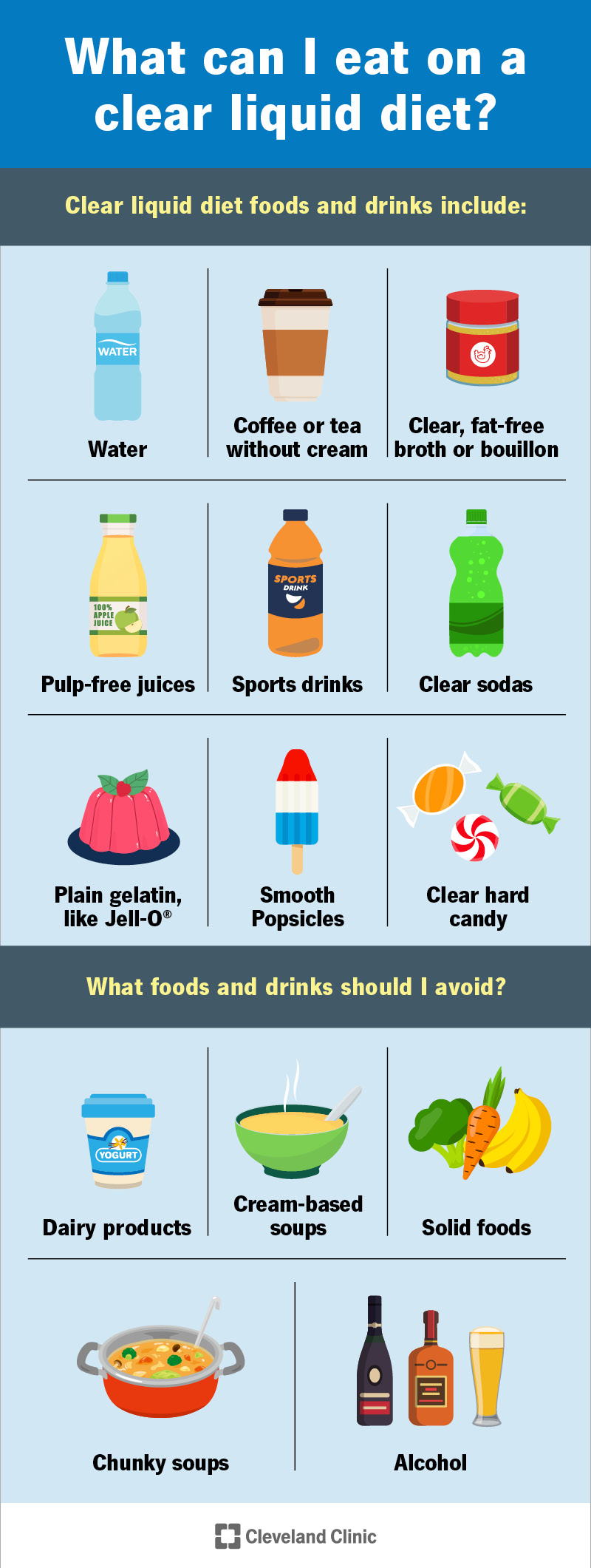
Image content: This image is available to view online.
View image online (https://my.clevelandclinic.org/-/scassets/images/org/health/articles/21764-clear-liquid-diet.jpg)
A clear liquid diet includes only fluids and foods that are liquid at room temperature and that you can see through. These liquids leave little or no solid material in your digestive tract. Examples include water, clear broth and plain gelatin. Even if something looks light or thin, like milk, your healthcare provider won’t consider it a clear liquid.
Advertisement
Cleveland Clinic is a non-profit academic medical center. Advertising on our site helps support our mission. We do not endorse non-Cleveland Clinic products or services. Policy
This diet is easy for your body to digest and helps keep you hydrated. It also provides small amounts of sugar and electrolytes. But it doesn’t provide enough protein, vitamins, minerals or calories to meet your daily nutrition needs.
Because it isn’t nutritionally complete, a clear liquid diet is meant for short-term use only. You should use it for only a few days, unless your provider says otherwise.
You may need to start a clear liquid diet to protect your digestive tract or prepare your body for a medical procedure. Your healthcare provider may prescribe it:
A clear liquid diet isn’t a weight loss plan. It’s a temporary medical diet your provider may prescribe to ensure safety, healing and accurate testing.
Advertisement
Clear liquid diet foods and drinks include:
You should avoid foods that aren’t considered clear, including:
For colonoscopy prep, you may need to avoid orange, red or purple foods and drinks. Always follow your provider’s instructions.
This diet isn’t nutritionally complete. Staying on it for too long can lead to:
So, you should only follow it for a short time. Your healthcare provider will usually recommend staying on it for no more than three days. If you need to stay on it longer, they’ll have you take a dietary supplement. Supplements can help provide the nutrients you need over a longer period of time.
The benefits of a clear liquid diet include:
A clear liquid diet is safe for short-term use. But staying on it too long can cause problems. These can include:
These risks are low when you follow the diet for only a short time and under medical guidance.
A clear liquid diet can feel limiting. But a few small steps can help. These include:
Advertisement
Contact your healthcare provider if you experience:
They may have you stop the diet or add a dietary supplement to your daily intake.
A clear liquid diet includes only liquids you can see through. These liquids leave little or no residue in your digestive tract. This makes the diet useful before procedures like colonoscopy or surgery. They also help when your digestive tract needs a rest.
A full liquid diet includes all liquids, even those you can’t see through. They just can’t contain any chunks or solid pieces. This includes milk, shakes, frozen yogurt and creamy soups. These liquids provide more calories and nutrients than clear liquids but still limit solid food.
Both diets help rest your digestive tract after illness or surgery and slowly return you to normal eating. The full liquid diet is less restrictive and is often the next step after a clear liquid diet.
A clear liquid diet can feel restrictive, especially if you’re already not feeling well. But it helps your body rest, recover and/or prepare for care. You may feel tired or hungry, and that’s normal. Most people only need it for a short time. Follow your provider’s guidance closely and ask questions if you’re unsure about what’s allowed. Once it’s safe, they’ll guide you back to more nourishing foods.
Advertisement



Sign up for our Health Essentials emails for expert guidance on nutrition, fitness, sleep, skin care and more.
Learn more about the Health Library and our editorial process.
Cleveland Clinic’s health articles are based on evidence-backed information and review by medical professionals to ensure accuracy, reliability and up-to-date clinical standards.
Cleveland Clinic’s health articles are based on evidence-backed information and review by medical professionals to ensure accuracy, reliability and up-to-date clinical standards.
If you have issues with your digestive system, you need a team of experts you can trust. Our gastroenterology specialists at Cleveland Clinic can help.